
Loading...
Serving Edinburg, TX and surrounding areas. (956) 957-0065
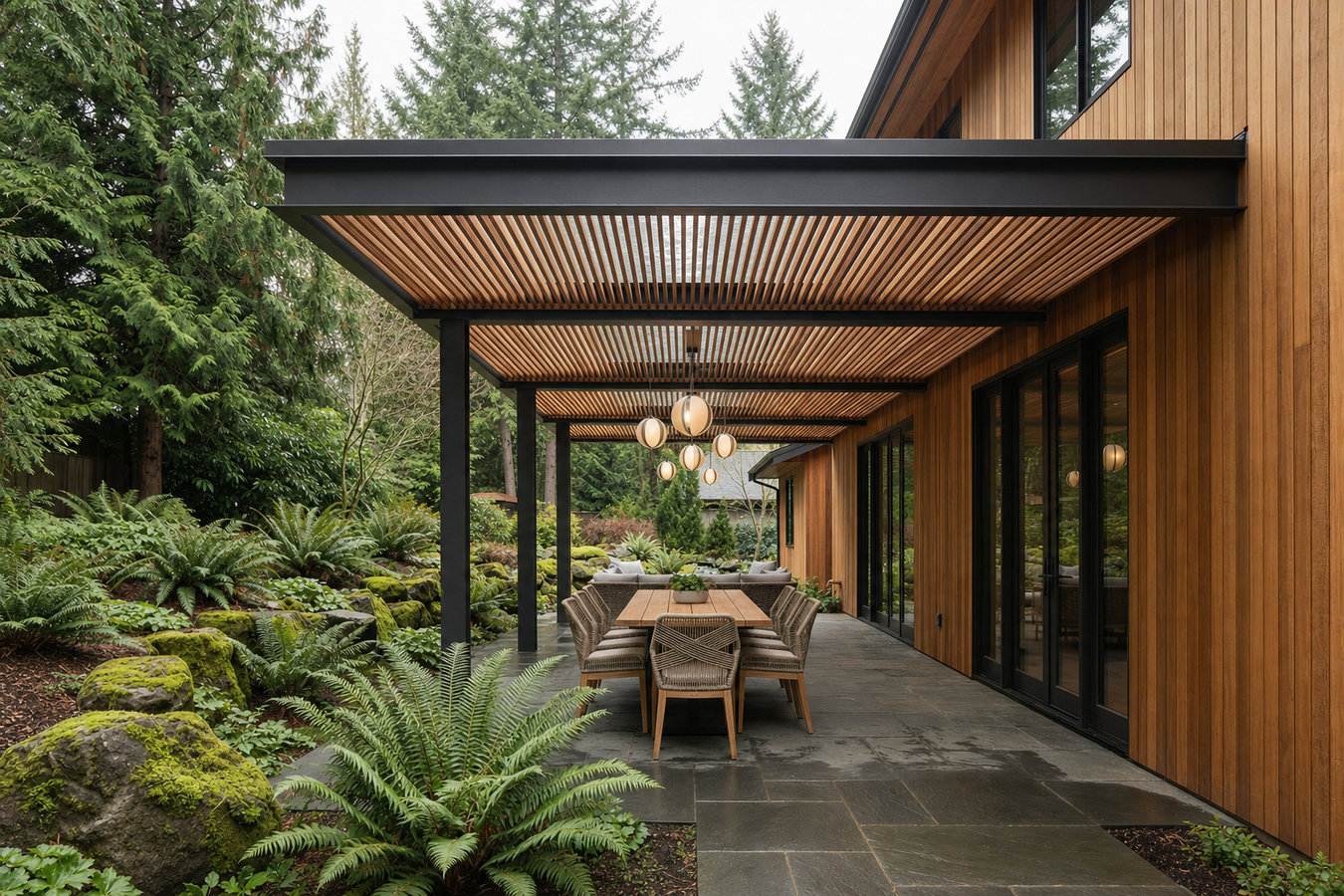
An open patio in South Texas is unusable for most of the year. A covered patio or deck changes that - shade built to handle Edinburg heat, with permits filed and materials chosen for this climate.
Covered deck and patio cover construction in Edinburg means building a shaded roof structure - solid or lattice - over your outdoor space, with posts set in concrete footings designed for local clay soil, a city permit filed and approved before work begins, and a roofline sloped to drain water away from your home - most projects take two to seven business days on-site, with permit processing adding one to three weeks before construction starts.
In Edinburg, summer heat regularly pushes past 100 degrees and stays there for weeks at a time. An open patio is essentially unusable from mid-morning through late afternoon during those months - and that is a long stretch of the year in South Texas. A covered patio solves that problem by putting shade where you need it, lowering the temperature under the roof significantly, and making your outdoor space genuinely comfortable for more of the year. If you want both shade and insect protection, our screened-in porches and screened decks service can be combined with a covered structure to give you a fully enclosed outdoor room.
The two things that separate a well-built covered patio from one that causes problems are drainage design and footing depth. A roofline that does not slope correctly will pool water and push moisture toward your home's exterior wall. Posts set too shallow in Edinburg's clay soil will shift as the ground moves with rain and dry cycles. We address both of those details on every project, because a covered patio that causes new problems is not worth building.
If you step outside in the afternoon and immediately retreat because the heat is unbearable, your outdoor space is not working for you. In Edinburg, where summer heat regularly pushes past 100 degrees, an uncovered patio is essentially unusable for most of the year. A covered structure drops the temperature under the roof noticeably, making evenings and mornings genuinely comfortable.
Cracks running across your concrete patio or sections that have shifted up or down are signs that Edinburg's clay soil has been pushing and pulling the slab over time. This is also a signal that any new covered structure will need footings designed specifically for local soil conditions. A contractor who recognizes this will address the slab and the footing design together so the new structure starts on solid ground.
Standing water near your home's back wall or door after a storm means your outdoor area lacks proper drainage. A covered patio with a correctly sloped roof can redirect water away from your foundation - but only if the drainage is designed into the project from the start. This is worth mentioning to your contractor during the estimate so they can factor it into the design.
If your patio furniture, grill, or outdoor cushions are fading and deteriorating faster than they should, prolonged UV and rain exposure is the cause. In Edinburg's climate, the sun alone can fade and crack unprotected materials within a single season. A covered structure protects that investment and extends the life of everything you keep outside - which over time offsets some of the cost of building it.
We build covered patios and covered decks for homeowners across Edinburg and the Rio Grande Valley, working in aluminum, pressure-treated wood, and custom combinations depending on your budget and what fits your home. Every project starts with a permit application to the City of Edinburg and a site visit where we measure your space, look at your existing slab or ground conditions, and discuss your options for roof style and materials. Aluminum patio covers are our most requested material for attached structures because of how well they handle South Texas UV and humidity without maintenance. For homeowners who want a more open overhead option, our pergola installation service provides a lattice-style structure that filters sunlight without full coverage.
Roof drainage is part of the design conversation on every project, not an afterthought. We slope the roofline away from your home and make sure flashing and caulking at the wall attachment point keeps water from working behind your siding. For homeowners who want insect protection added to their covered patio, we also build fully enclosed screened-in porches and screened decks - both projects can be planned and priced together during your estimate visit so you can compare your options before committing.
Suits homeowners who want a low-maintenance, long-lasting shade structure attached to the house - aluminum handles South Texas heat and humidity without rusting or warping.
Suits homeowners who want a traditional wood look and are willing to seal or paint the structure periodically - pressure-treated framing with a solid or lattice roof.
Suits homeowners who want a covered space that does not attach to the house - useful when the yard layout makes a detached structure more practical or when HOA rules limit attached additions.
Suits homeowners who want both shade and insect protection - a solid roof overhead with screened walls on the sides creates an outdoor room that is comfortable all year in Edinburg's climate.
Edinburg's climate makes shade a functional necessity rather than a nice-to-have. Temperatures regularly exceed 100 degrees from June through August, and the UV index is intense for most of the year - conditions that wear out outdoor materials faster than almost anywhere else in Texas. This is why aluminum is the dominant material for patio covers in the Rio Grande Valley: it does not rust in high humidity, does not warp or fade under intense UV, and requires no maintenance season after season. Homeowners in Weslaco and Mission face the same conditions and are choosing covered structures for the same reasons.
Two local factors shape how covered patios are built here specifically. Edinburg's expansive clay soil moves with every rain and dry cycle, which means post footings need to be dug deeper and wider than a minimum-code approach would require. A contractor who understands this will ask about your soil conditions during the estimate and design the footings accordingly. The City of Edinburg also requires building permits for permanent covered structures, which means the work is inspected by the city at key stages - a protection for you that also means the structure is documented as a legal improvement when you sell. The North American Deck and Railing Association and Texas A&M AgriLife Extension both publish guidance on outdoor structures and material performance in warm climates like South Texas.
We ask a few basic questions - roughly what size space you have in mind, whether you have an existing slab, and what you want to use the space for. We reply within one business day and schedule a visit to see your yard in person.
We measure your space, look at your existing slab or ground conditions, and walk through your options for roof style and materials. You receive a written quote - usually within a day or two - that breaks down what is included and what is not.
Once you have agreed on a design and signed a contract, we submit the permit application to the City of Edinburg. If your neighborhood has an HOA, we help you prepare that submission too. Permit approval typically takes one to three weeks, and we keep you updated throughout.
Most covered patio projects take two to seven business days on-site. When construction is complete, we walk you through the finished structure - showing you how water drains and what maintenance the material requires. The work area is cleaned up before we leave.
We handle permits, manage the timeline, and use materials chosen for South Texas conditions. Free written estimate, no obligation.
(956) 957-0065We recommend aluminum, properly treated wood, or steel based on what holds up in Edinburg's specific combination of intense UV, high heat, and periodic heavy rain - not just what is cheapest or easiest to install. The material choice your contractor makes today determines how many repairs you deal with in the next decade.
A covered patio with a flat or poorly sloped roof will pool water and push moisture toward your foundation or siding over time. We slope every roofline away from the house and install flashing at wall attachment points - details that matter more in the Rio Grande Valley's periodic heavy rain season than homeowners often realize.
We file the permit with the City of Edinburg, coordinate the inspection, and close it out properly. That means when you sell your home, the covered patio shows up as a legal, inspected improvement - not an unpermitted structure that a buyer's inspector flags. The Texas Department of Licensing and Regulation oversees contractor licensing for exactly this type of residential construction.
Edinburg's clay soil expands when wet and shrinks when dry - and that movement is what causes covered patio posts to lean or crack over time. We dig post holes to the depth and diameter that local conditions require, not just what minimum code allows. That difference is what keeps your structure straight and stable for years rather than seasons.
Every one of these details is part of how we build, not an upsell. When the work is done right from the start, you get a covered patio that looks good, holds up, and protects your investment for years to come.
An open lattice or beam overhead structure that adds architectural interest and filters light without a full solid roof.
Learn MoreCombine a covered roof with screened walls to create an outdoor room that blocks insects and keeps your family comfortable year-round.
Learn MoreReach out now and we will schedule your free on-site estimate - lock in your build date before the spring season fills the calendar.